
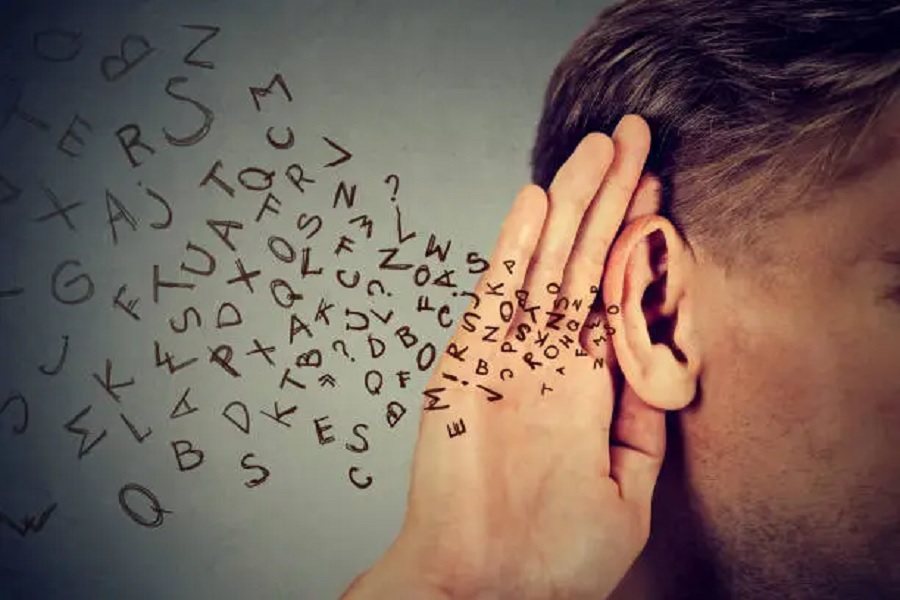
Writing for radio is writing for the ear. Writing as you would speak. Better still, write as you would hear.
Because of the strict time limits observed in news broadcasts, the script must be written. But the difficulty with having to use a script is that people have been trained in school to write material only for other people to read silently to themselves. This writing is for reading, not for talking aloud.
Writing for radio is quite different from writing for print media. We must write for the ear, not for the eye. The ear takes in a sentence word by word. It must wait until the end of a sentence to discover its shape, to understand its full meaning.
Here are some guidelines on how you can improve your news writing skill for radio:
It’s a good practice to work with typists. In that case, the journalist doesn’t type this copy, he dictates, or rather speaks and the typist writes, tell the news to your typist as your audience will eventually hear it.
If you have to type the script yourself, it’s a must to say it aloud. Too often, a typewriter is a barrier to clear communication. Good journalists talk to themselves as they write, testing each phrase for its sound and judging how easy it is to say. Whether you are a reporter or a bulletin editor it is saying copy.
There are five key principles you should always remember about any radio program.
- It is spoken
- It’s immediate
- It’s person to person
- It’s heard only once
- It’s sound only
- It is spoken
It’s not written literature, it is TALK. So be natural and use only words you know the meaning of and which are in your spoken vocabulary. The following example may sound all right in a United Nations Assembly, but not on air.
| Not | The implementation of the environmental quality promotion and preservation project, which will be launched during the Fifth National Economic and Social Development Plan, will place emphasis on solutions to the problems of pollution, population migration and settlement, the deterioration of natural resources and the changes of ecology. |
| But | Government has plans to tackle the problem of environment pollution under the new Economic and Social Development Plan. A project to improve the quality of the environment is to be launched. It will try to find solutions for the problems of pollution, the migration from villages to cities and the increasing scarcity of natural resources. |
Use the spoken words of everyday speech. Don’t be afraid to use the same word twice or three times, if it is the right word. The broadcast style must be natural, not invented.
| Not | The road is not motorable |
| But | The road is blocked (or closed, impassable)
Or; the road can’t be used |
Contractions are common in conversation, but the person starting out to write news for broadcast often seems instinctively to avoid them.
So, use: that’s, there’s he’s, they’re, don’t, wont, isn’t, aren’t, etc
But don’t use contractions if you want to emphasize any words, particularly in the case of a strong negative emphasis.
Example: he said last night he will not resign
- It’s immediate
Radio is the “now” – medium!
The greatest advantage over newspapers is immediacy is immediacy, and this can be emphasized by using the present tense. Wherever possible, use the present tense rather than reported speech. This newspaper style sounds strange on the air.
| Not | The Prime Minister said today the country’s economy was booming. |
| But | The Prime Minister says the country’s economy is booming |
Things read on the radio should appear to the listener to be happening NOW. The present tense is a typical broadcast tense because it gives a sense of immediacy.
- It’s person to person
Writing for radio is not great oratory, it must be informal, it’s YOU and ME. There may be thousands of others listening at the same time, but each of them is listening on his own, or in a small group.
However, in news programs, the style can be slightly more formal than ordinary conversation, yet certainly not as rigid as that of a newspaper. It must be easy to listen to without sounding casual. Although radio must give news straight, remember that it is also an entertainment medium. Try not to be dull and too formal in your style. Try to avoid bureaucratic language.
| Not | The Executive Committee of the National Economic Council has approved the third phase of the family planning scheme involving an expenditure of over 200 crore rupees with a foreign exchange component of about 106 crore rupees. |
| But | The National Economic Council has approved the third phase of the family planning scheme. Over 200 crore rupees will be spent. Almost half of that money is foreign aid. |
But when it is necessary to use an unfamiliar word, it should be explained in a short explained in a short explanatory sentence.
Example: write of Habeas Corpus, this means that the authorities must bring the suspect before the judge.
Radio must become a friend, whom the listener will believe. And when we broadcast, we should talk as to a friend.
- It’s heard only once
The broadcast, once made, is gone and the listener has no means of referring to what was said. If the audience has to think twice, to disentangle some cumbersome clause, what you say is lost forever.
Clarity has top priority
Use simple, declarative short sentences. When a sentence is too long, it can easily be split up into two or three simple sentences. Don’t cream all the information in one sentence.
Clarity relies almost completely on simplicity. Confusion comes from complex technical terms, etc. in other words, always try to say it simply.
| Not | Pakistan and Austria have both agreed on the desirability of expanding two-way trade and increasing Austria participation in the economic development of Thailand under the fifth Five Year Plan. |
| But | Pakistan and Austria want to expand trade. Austria will also participate more in the economic development of Thailand under the fifth five year plan. |
The enemy is confusion
Leave out superfluous information. The problem of comprehension is not only a question of simple language. The idea that is conveyed in a news item must also be easily grasped. You have only one chance! A most useful technique is to put only one idea in one sentence.
| Not | Prices of white sugar and white refined sugar to be sold in the country are set at 7 Rupees and 8 Rupees a kilo respectively. |
| But | The price of white sugar is set at 7 Rupees a Kilo. And white refined sugar will be sold at 8 Rupees for a kilogram |
- It’s sound only
Words are the bridge between the news-writer and the listener. Words are the tools of our trade
Don’t be vague or ambiguous. Use words that convey concrete images.
Be exact and concise. Explain complex and abstract concepts. If you can’t, avoid them.
| Not | He also said reciprocity will be the guiding rule in the implementation of the U.S. – Pakistan extradition treaty, aimed at curbing crimes that could create irritants to their bilateral relations. |
| But | He also says both the Pakistan and the United States will apply the same principles under the extradition treaty. The treaty aims at curbing crimes that could cause difficulties between the two countries. |
Avoid sound clashes, they are distracting to the listener.
| Not | The building is built by a local builder. |
| But | A local company has built the house. |
Be careful with words that sound alike.
Example Accept – Expected
Retain – Regain
| Not | Container handling through Gawadar Port increased by more than 19 percent |
| But | Container handling increased by about 20 percent. |
Punctuation is absolutely vital. When eyes see a mark on a page, the brain reacts in a certain way. A large percentage of reading is automatic. Therefore, if the news-reader’s brain is suddenly confronted with something unusual, it will cause some hesitation. No matter how momentary, the hesitation will be noticed by the listener. So, remember that you are writing a script to be read aloud. Your punctuation must be correct. Newsreaders expect properly written material.
However, if a sentence is not properly written, punctuation won’t be of much help, as this example shows:
“The chairman of the association”, said Mr. Khalid, “is a liar”.
The listener will get the opposite impression of what you intended.
In this case put the name of the speaker first.